Can I Afford to Live in Auckland? A Weekend Data Project
A weekend side project exploring how publicly available New Zealand data can be turned into an interactive Auckland affordability calculator with Python and Streamlit.
☕ Grab your favorite drink, get comfortable, and let’s slow down for a moment.
🌿 Explore AI, Data Science, and Math & Statistics through gentle explanations and interactive tools designed for beginners and anyone from a non-technical background.
✨ Coffee Break Quiz is intentionally unrelated to AI, math, or data. Instead, it’s a gentle pause to notice the small wonders of nature and everyday life, so you can return feeling a little refreshed.
🔧 Project Notes follows real side projects from the first idea to a working dashboard.
A gentle nature quiz on six curious animal behaviors, from a bee's waggle dance to how sea otters anchor themselves in kelp while they sleep. Six questions, six little wonders.
Start Quiz →Fresh From The Corner
A weekend side project exploring how publicly available New Zealand data can be turned into an interactive Auckland affordability calculator with Python and Streamlit.
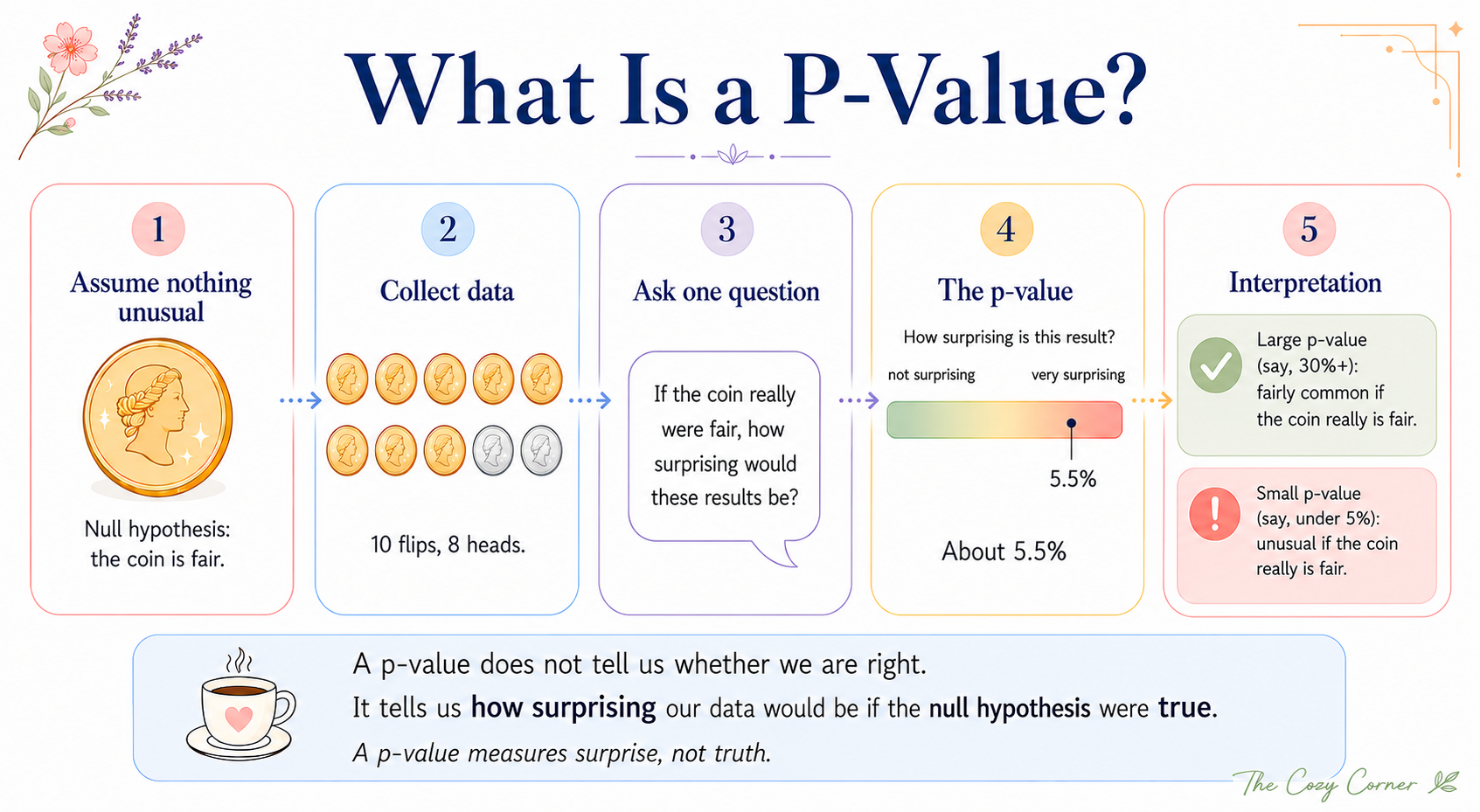
A calm, plain-language guide to p-values, one of the most misunderstood ideas in statistics, and why it matters so much in data science.

LLM. Tokens. Context windows. Fine-tuning. Hallucinations. A cozy, plain language glossary for the AI vocabulary everyone seems to be using these days.

A walk through a forest turns out to be one of the best ways to understand how modern AI actually works, and along the way you'll pick up the term data scientists use for it: emergence.
Learn what a normal distribution is, why it's called the bell curve, and where it appears in everyday life.
Linear function and linear regression sound alike but they do completely different jobs. Here's the simple explanation, with no maths degree required.
Standard deviation sounds intimidating but it just measures how spread out your data is. Here is what that actually means, with no formulas required to get started.
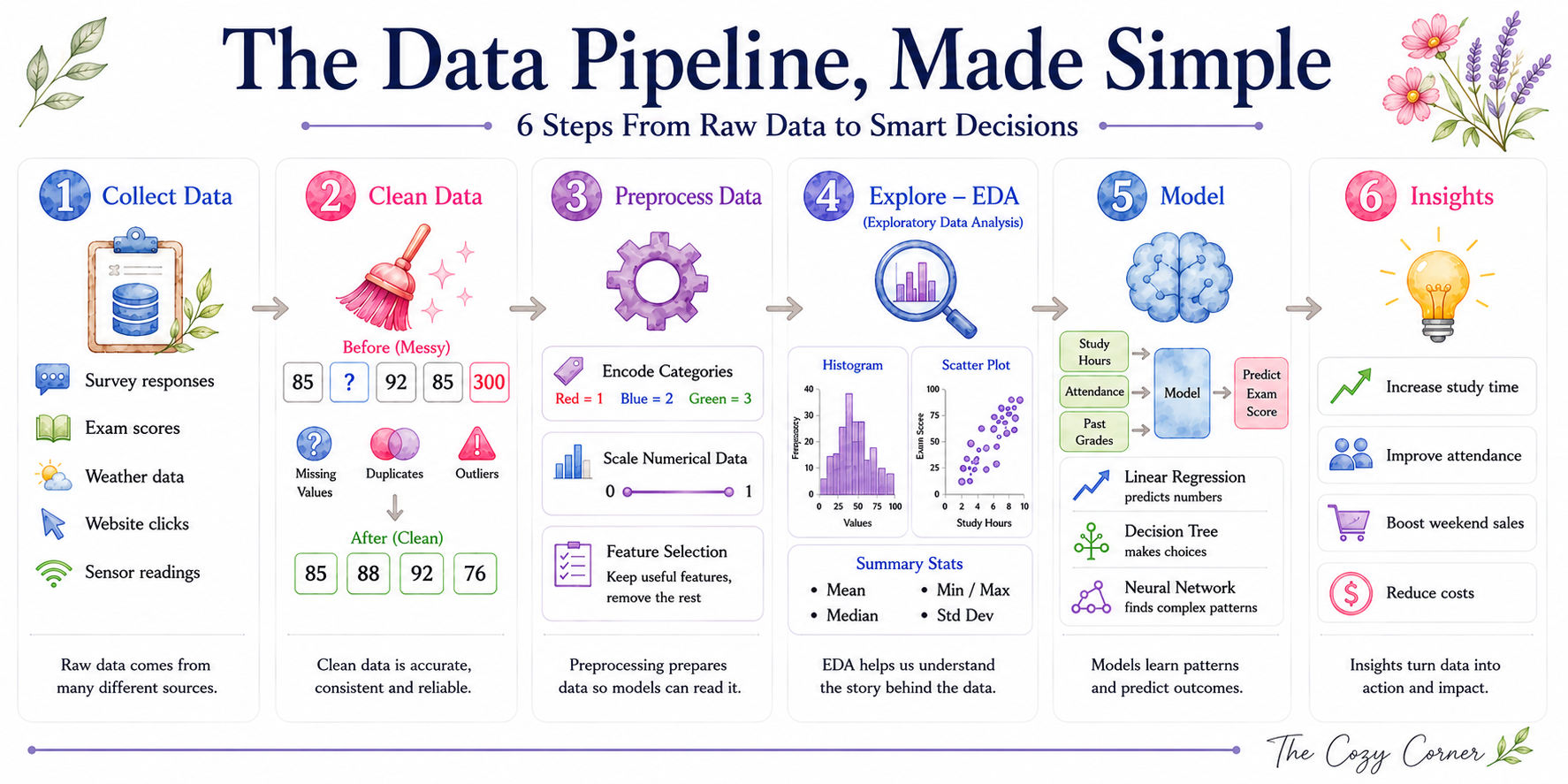
A simple story about how raw data becomes useful insights.
A simple explanation of linear functions - focusing on understanding before formulas.
A simple look at why ‘average’ doesn’t always mean what you think it means.
Selected Category

A gentle nature quiz on six curious animal behaviors, from a bee's waggle dance to how sea otters anchor themselves in kelp while they sleep. Six questions, six little wonders.

A gentle quiz to help you notice the small, quiet moments that instantly lift your mood.

A lighthearted look at your everyday habits, small decisions, and daydreams. Find out which cozy chaos type matches you best.
The world is painted with countless shades of blue, pink, green, and gold. But where do these colors come from? Some are created by light, others by chemistry, and some by the food living things eat. Let's explore five colorful wonders of nature.
Selected Category
A calm, plain-language guide to p-values, one of the most misunderstood ideas in statistics, and why it matters so much in data science.
Linear function and linear regression sound alike but they do completely different jobs. Here's the simple explanation, with no maths degree required.
Standard deviation sounds intimidating but it just measures how spread out your data is. Here is what that actually means, with no formulas required to get started.
A simple explanation of linear functions - focusing on understanding before formulas.
A simple look at why ‘average’ doesn’t always mean what you think it means.
Selected Category
Linear function and linear regression sound alike but they do completely different jobs. Here's the simple explanation, with no maths degree required.
A simple story about how raw data becomes useful insights.
Selected Category
LLM. Tokens. Context windows. Fine-tuning. Hallucinations. A cozy, plain language glossary for the AI vocabulary everyone seems to be using these days.
A walk through a forest turns out to be one of the best ways to understand how modern AI actually works, and along the way you'll pick up the term data scientists use for it: emergence.